
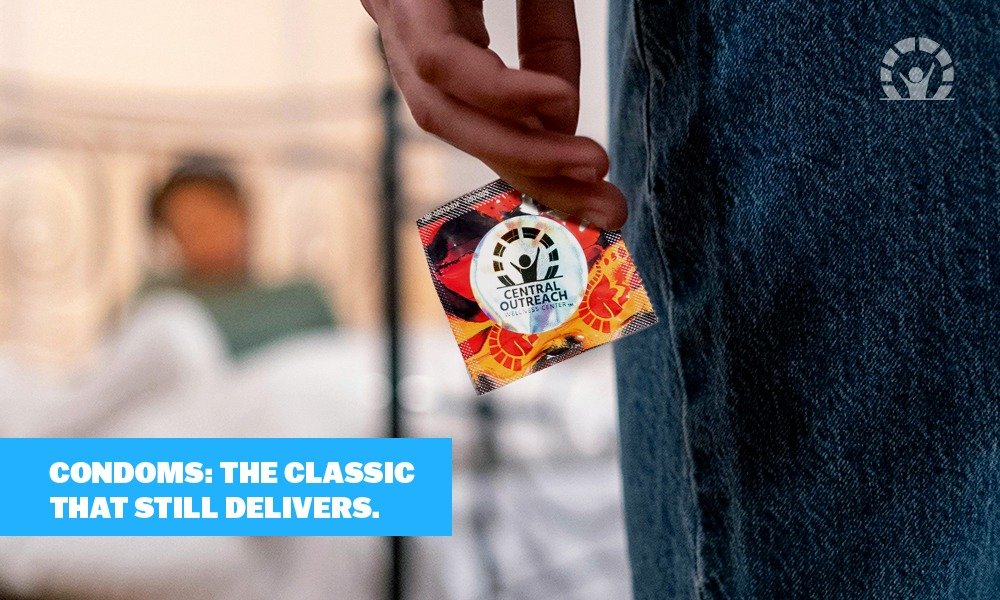
Condoms are not boring. They are not outdated. They are not a “backup plan.” They are one of the most accessible, affordable, and effective tools we have for protecting ourselves and our partners, and they’ve been doing the job well for decades.
We talk about condoms the way we talk about PrEP, DoxyPEP, STI testing, and gender-affirming care: as tools. Just options that help you stay in control of your health and your pleasure.
What Do Condoms Actually Do?
Condoms create a barrier that helps prevent:
- HIV
- Gonorrhea
- Chlamydia
- Syphilis
- Hepatitis B
- Pregnancy
When used correctly and consistently, external condoms are highly effective at reducing HIV transmission and significantly reduce the risk of many other STIs, according to the Centers for Disease Control and Prevention. They’re simple. They’re portable. They don’t require a prescription. And they work.
External vs. Internal Condoms
External condoms (sometimes called “male condoms”) go over a penis or sex toy.
Internal condoms (sometimes called “female condoms”) go inside the vagina or anus.
Both provide protection. Both deserve more hype. Internal condoms can be especially empowering because the receptive partner controls placement, and they can be inserted ahead of time. That means less interruption when things get heated.
Let’s Talk Effectiveness (Realistically)
No prevention method is 100% perfect except not having sex, and we’re a sex-positive clinic, so we’re going to talk about real life.
With typical use, external condoms are about 87% effective at preventing pregnancy. With perfect use, they’re about 98% effective. For HIV prevention, consistent condom use dramatically reduces risk.
What makes the difference?
- Putting it on before any genital contact
- Using enough water- or silicone-based lube
- Not reusing condoms
- Checking the expiration date
- Storing them somewhere that isn’t your hot car dashboard
Condoms don’t “just break.” Most failures happen because of incorrect use or lack of lubrication.
Yes, You Still Need Condoms If…
- You’re on PrEP (PrEP prevents HIV, not other STIs)
- You’re undetectable (U=U prevents HIV transmission, but not other STIs)
- You “trust” your partner (trust is beautiful — testing is responsible)
- You’re using birth control (birth control doesn’t prevent STIs)
Condoms layer protection. They’re part of a bigger sexual health strategy.
What About Latex Allergies?
If latex irritates you, you have options. Non-latex condoms made from polyurethane or polyisoprene are effective alternatives. Lambskin condoms can prevent pregnancy, but do not protect against HIV or other STIs because the material has microscopic pores.
If condoms have ever felt uncomfortable, dry, or irritating, that’s usually a lube issue or a sizing issue, not a “condoms aren’t for me” issue. Yes, size matters. And yes, we can help you figure that out without making it awkward.
Condoms + Lube = Better Sex
We cannot say this enough: use lube. Friction causes condom breakage. Lube reduces friction: more glide, less irritation, better sensation.
Just remember:
- Oil-based lube + latex condoms = not friends
- Water-based or silicone-based lube + condoms = great combo
Let’s Address the Elephant in the Room
“But condoms don’t feel as good.” For some people, sensation changes. For others, the peace of mind actually improves pleasure. Anxiety kills orgasms faster than latex ever will.
There are ultra-thin condoms, textured condoms, different fits, and different materials. If one type didn’t work for you in 2014, that doesn’t mean all condoms are off the table forever. Sex should feel good. Protection helps it stay that way.
Condoms Are Still Relevant, Even in the PrEP Era
We love PrEP. We prescribe it every day. We celebrate U=U. We believe in harm reduction. But condoms remain one of the few prevention tools that protect against multiple infections at once, without needing labs, prescriptions, or insurance. They are low-barrier, high-impact public health.
And they’re still cool. We said what we said.
Need Condoms? We’ve Got You.
At Central Outreach, condoms are available at our clinics and outreach events, because access shouldn’t be complicated. We’re here for it. Sexual health isn’t about judgment. It’s about information, options, and support. And condoms? They’re still one of the best first steps.
“Make sure to use condoms correctly and with plenty of lube. Whether you use condoms or not, ask your provider about PrEP and Doxy PEP, and get tested regularly. There are different forms of PrEP available, and we can work with you to access the one that works best for you. The more layers of protection you have, the greater your peace of mind and pleasure,” says Susan Gibson, Nurse Practitioner.
Sources
- Centers for Disease Control and Prevention. Condom Effectiveness.
- World Health Organization. Condoms for HIV Prevention.
- CDC. HIV Risk Reduction Tool.
- CDC. STI Treatment Guidelines.
