
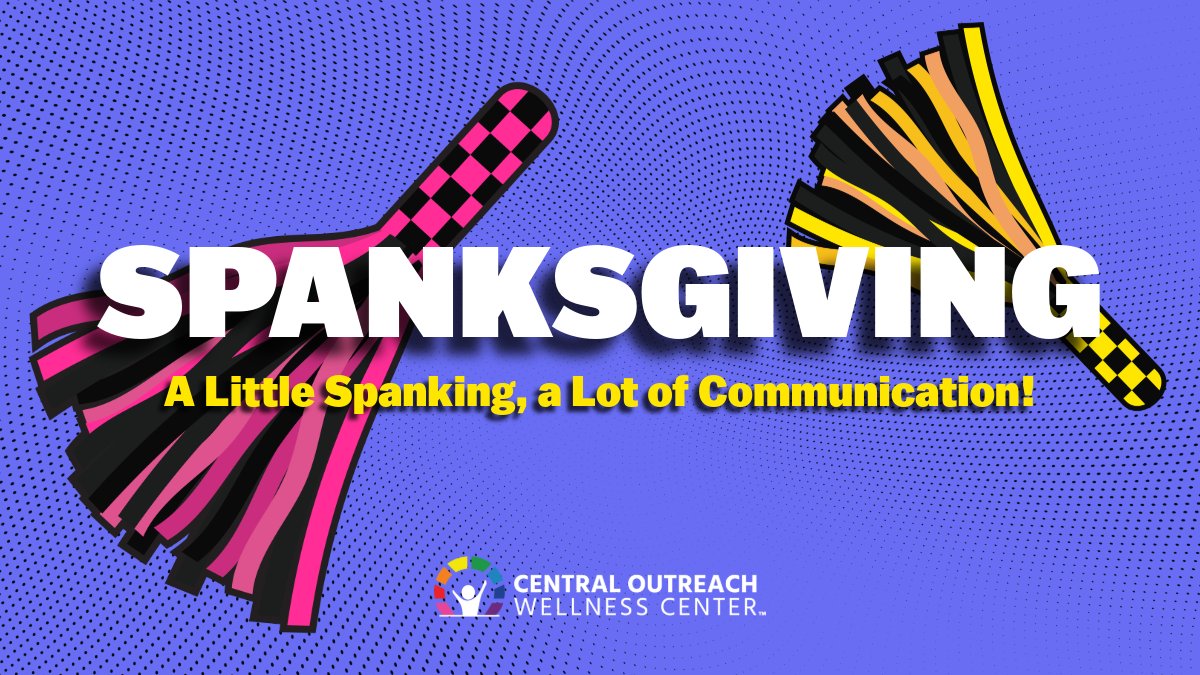
November 28th is Spanksgiving, a playful take on the holiday that gives us the perfect excuse to talk about spanking, kink, and consensual adult pleasure. Whether you're curious about exploring something new or already enjoy a little impact play, there's more to spanking than meets the eye.
What Is Spanking, Anyway?
Spanking is a form of impact play, which falls under the broader umbrella of kink and BDSM. It involves consensual striking of the body for physical sensation, pleasure, excitement, or other experiences agreed upon by the people involved.
For some people, spanking is sexually exciting. For others, it's about sensation, trust, power exchange, or exploring a particular fantasy. And contrary to popular belief, not all kink has to involve sex!
Kink looks different for everyone. There is no single right way to explore it, and enjoying spanking or other forms of BDSM doesn't automatically mean something is wrong with you. What matters is that everyone involved is an informed, willing participant.
“Spanking can add a little punctuation to your passion. And sometimes, honey, the sentence calls for an exclamation point. As a nurse practitioner, I tell my patients that it’s okay to be curious and to talk openly about what you enjoy. If you’re both interested, talk about what sounds fun, what’s off limits, and how you’ll let each other know when to slow down or stop. Start soft and slow, check in as you go, and remember that either of you can change your mind at any point,” said Kweilynn Michelle Greene, MSN, MBA, CRNP, FNP-C, AAHIVS.
A Few Fun Facts About Spanking and Kink
- Communication is part of the fun. Many BDSM activities involve more discussion and planning before play than people might expect. Talking about boundaries, expectations, and desires is essential.
- Kink isn't one-size-fits-all. Some people enjoy light spanking, while others prefer different forms of impact play. Everyone has their own interests and limits.
- Safe words are not just for beginners. Experienced kink practitioners use safe words and signals, too. They help everyone communicate throughout an experience.
- Aftercare matters. The experience doesn't necessarily end when the activity stops. Checking in, offering reassurance, and addressing physical and emotional needs can be an important part of kink.
How to Spank Safely
A little impact play can be enjoyable when everyone understands the risks and agrees to the experience. Before getting started, keep these tips in mind:
1. Talk About It Beforehand
Don't surprise someone with a spanking and assume they'll enjoy it. Talk about what you're interested in trying, what feels comfortable, and what is completely off-limits. Consent should be specific to the activity and can be withdrawn at any time.
2. Establish Safe Words or Signals
A safe word gives everyone a clear way to communicate. If someone cannot easily speak during play, agree on a nonverbal signal beforehand. One popular approach is the traffic-light system:
- Green: Everything feels good. Keep going.
- Yellow: Slow down, pause, or check in.
- Red: Stop immediately.
3. Know Your Boundaries and Body
Not every area of the body is appropriate for impact play. Avoid the head, neck, spine, kidneys, abdomen, joints, and other vulnerable areas. The fleshy portion of the buttocks is generally considered a lower-risk area, but injury is still possible. Start cautiously, communicate frequently, and never assume that more intensity means a better experience.
4. Stay Clear-Headed
Alcohol and recreational drugs can affect judgment, communication, and the ability to recognize or respond to boundaries. Make sure everyone is clear-headed and able to give informed consent before engaging in kink.
5. Don't Skip Aftercare
Aftercare is the time partners take to reconnect and check in after a scene. This might include cuddling, water, a snack, reassurance, or simply giving each other space. Everyone's needs are different, so discuss what aftercare looks like before you begin.
Consent Is Always in Style
It's important to remember that kink and abuse are not the same thing. Consensual kink involves communication, mutual agreement, respect, and the freedom to stop at any time. If someone pressures you, ignores your boundaries, or refuses to respect a safe word, that's not consensual play.
You should never feel obligated to participate in something just to please a partner. Your boundaries deserve respect, whether you're exploring kink for the first time or have been doing it for years.
Celebrate Spanksgiving Responsibly!
Spanksgiving can be a fun opportunity to explore pleasure, learn something new, and have conversations about the things people may feel uncomfortable discussing. Whether spanking is your thing, something you're curious about, or simply not for you, there's room for everyone to make informed decisions about their sexual wellness.
Sexual health includes more than STI testing and prevention. It also means understanding your body, communicating your boundaries, exploring pleasure, and feeling comfortable talking about your sexual experiences without judgment.
Sources and further reading
- National Coalition for Sexual Freedom – Best Practices for Consent to Kink — Informed consent, boundaries, risk awareness, and safe words.
- National Domestic Violence Hotline – Healthy BDSM Relationships Are Possible — Communication, safety considerations, aftercare, and recognizing coercion.
- Columbia University – How Can S&M Be Safe and Follow Consent? — Safe words, signals, and consensual BDSM practices.
- American Counseling Association – Kink Culture: What Professional Counselors Need to Know — Understanding kink, BDSM, consent, and sexual wellness.
- Northwestern University – Sexual Pleasure and Safety — Safe words, ongoing consent, and aftercare.
